
FOUL DRAINAGE
If your property cannot connect to a public foul sewer, waste water goes to a septic tank or a package treatment plant, and the treated effluent soaks into the ground through a drainage field. Before that drainage field can be designed you need a percolation test for the septic tank: a foul infiltration test carried out to BS 6297, the standard Part H of the Building Regulations refers to. We dig the test holes, carry out the timed fills and give you a report written to that standard.
What you get from a septic tank percolation test
BS 6297 and Part H
Tested to the standard the Building Regulations refer to, so the result stands up with building control and with your planning permission conditions.
Sized for the drainage field
The result gives the length and area of drainage field the treatment plant or septic tank needs.
Both tests, one visit
Many rural sites need a soakaway test and a foul test. We can carry out both on the same visit rather than two.
Testing Monday to Friday
Available across the Midlands, the Welsh borders and beyond, planned around your build programme.
This is not the same as a soakaway test
It is a common and expensive misunderstanding. A BRE365 percolation test sizes a surface water soakaway; a BS 6297 test sizes a foul drainage field. They use different procedures and produce different figures, and the two are not interchangeable. If your planning condition or building control officer asks for one, the other will not satisfy it.
If you are not sure which you need, tell us what is proposed and we will tell you: it is a two minute conversation and it saves a wasted visit.
THE METHOD
How the test is carried out
1
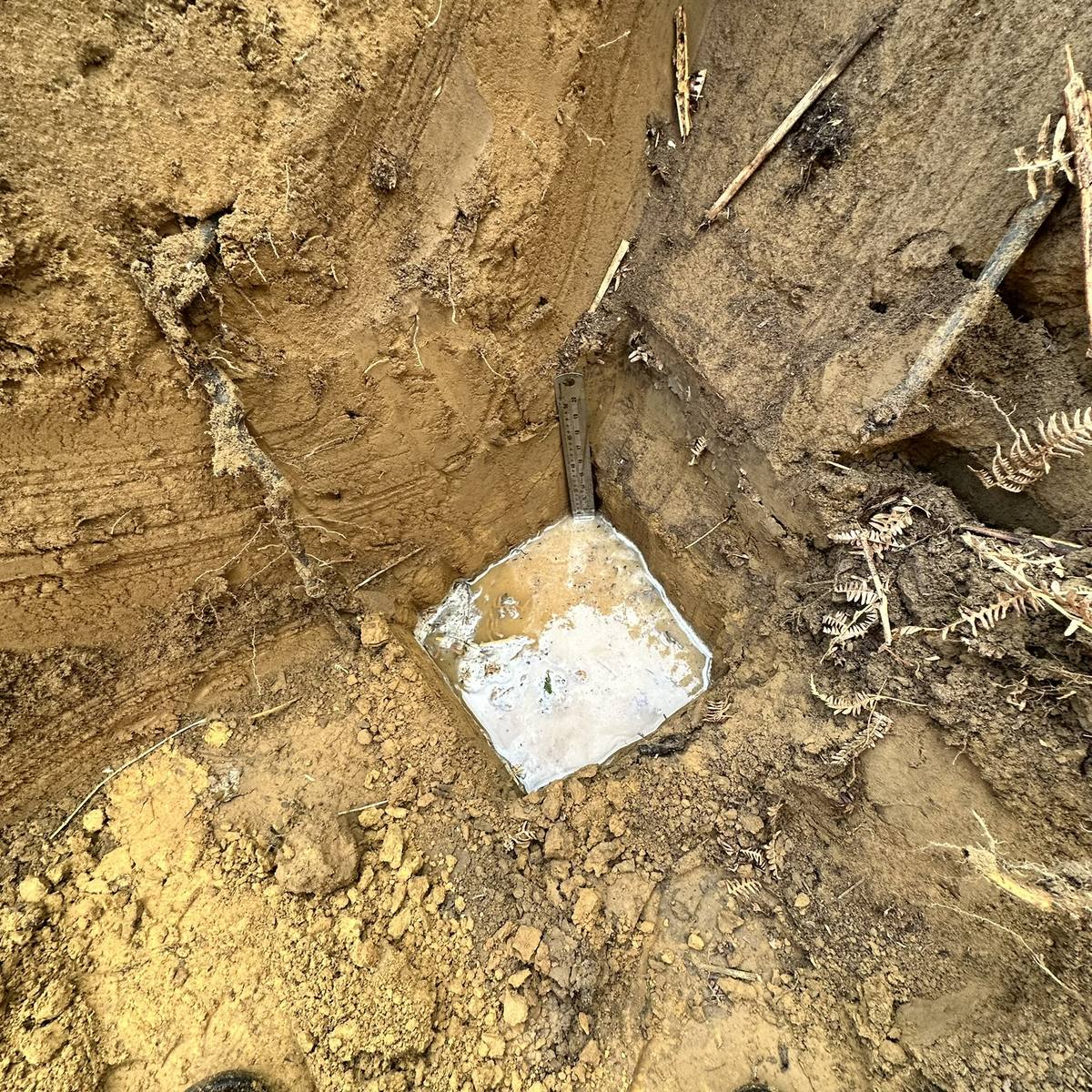
Trial holes dug
Holes are excavated at the proposed drainage field position and taken below the invert level of the field.
2
Filled and levelled
Each hole is filled and allowed to drain overnight, so the surrounding ground is wetted before timing starts.
3
Timed to BS 6297
The hole is refilled and the fall from 75% to 25% of the effective depth is timed, and the value calculated per BS 6297.
4
Field sized
The result gives the figure needed to size the drainage field for your treatment plant or septic tank.
What you receive
- A full report with the recorded times for every hole and every fill
- The calculated value needed to size the drainage field
- Trial hole locations and depths
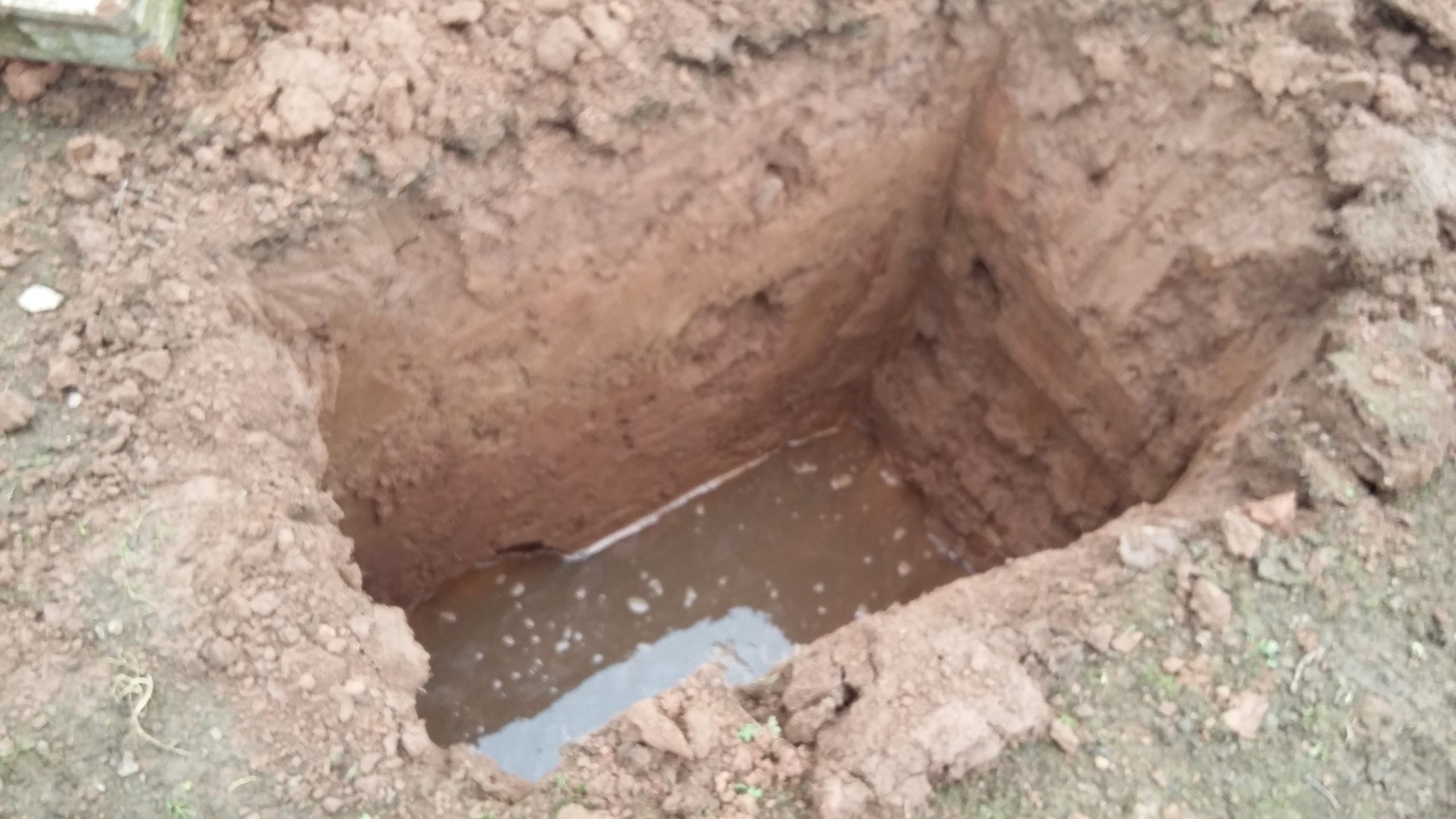
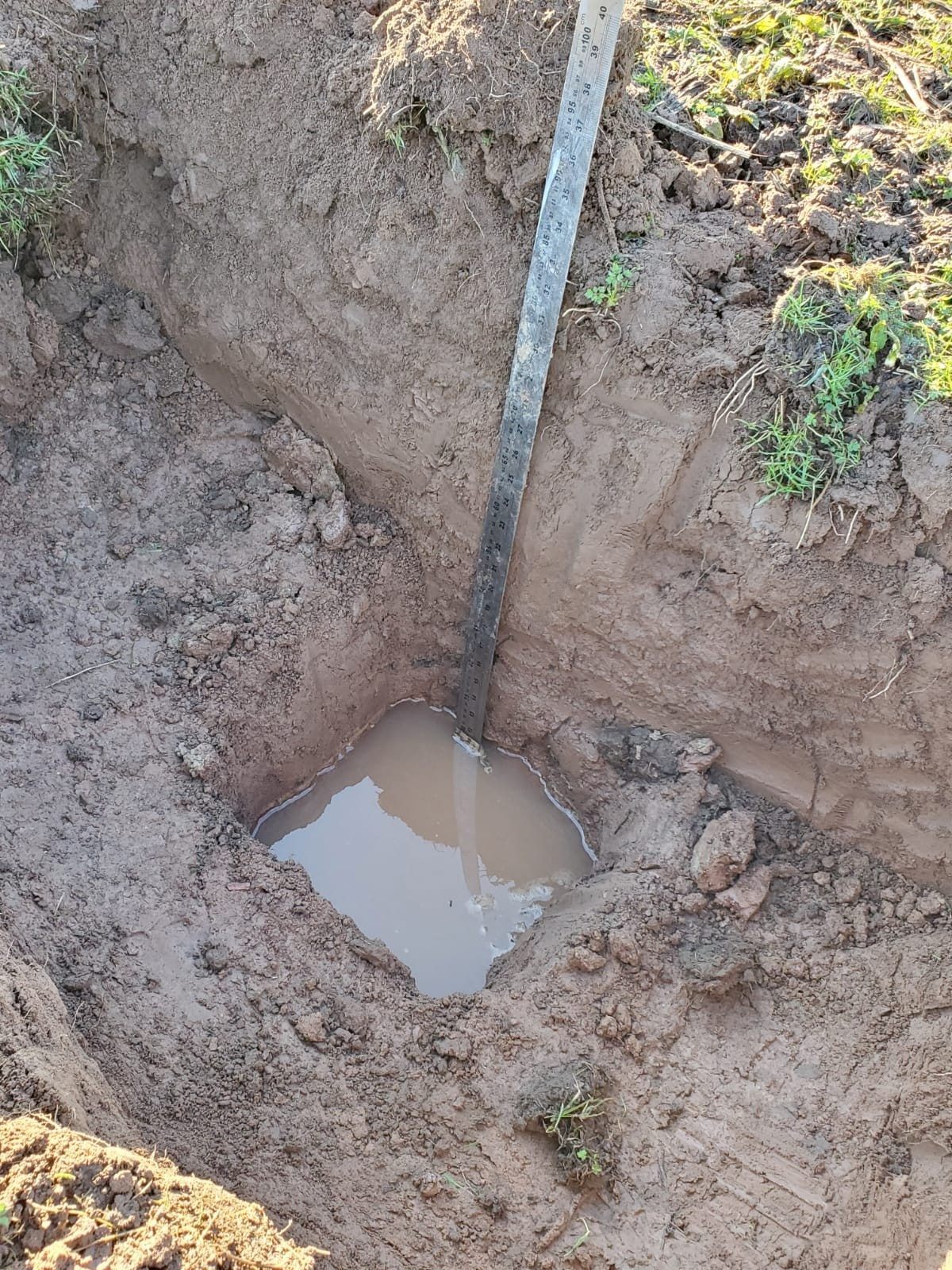
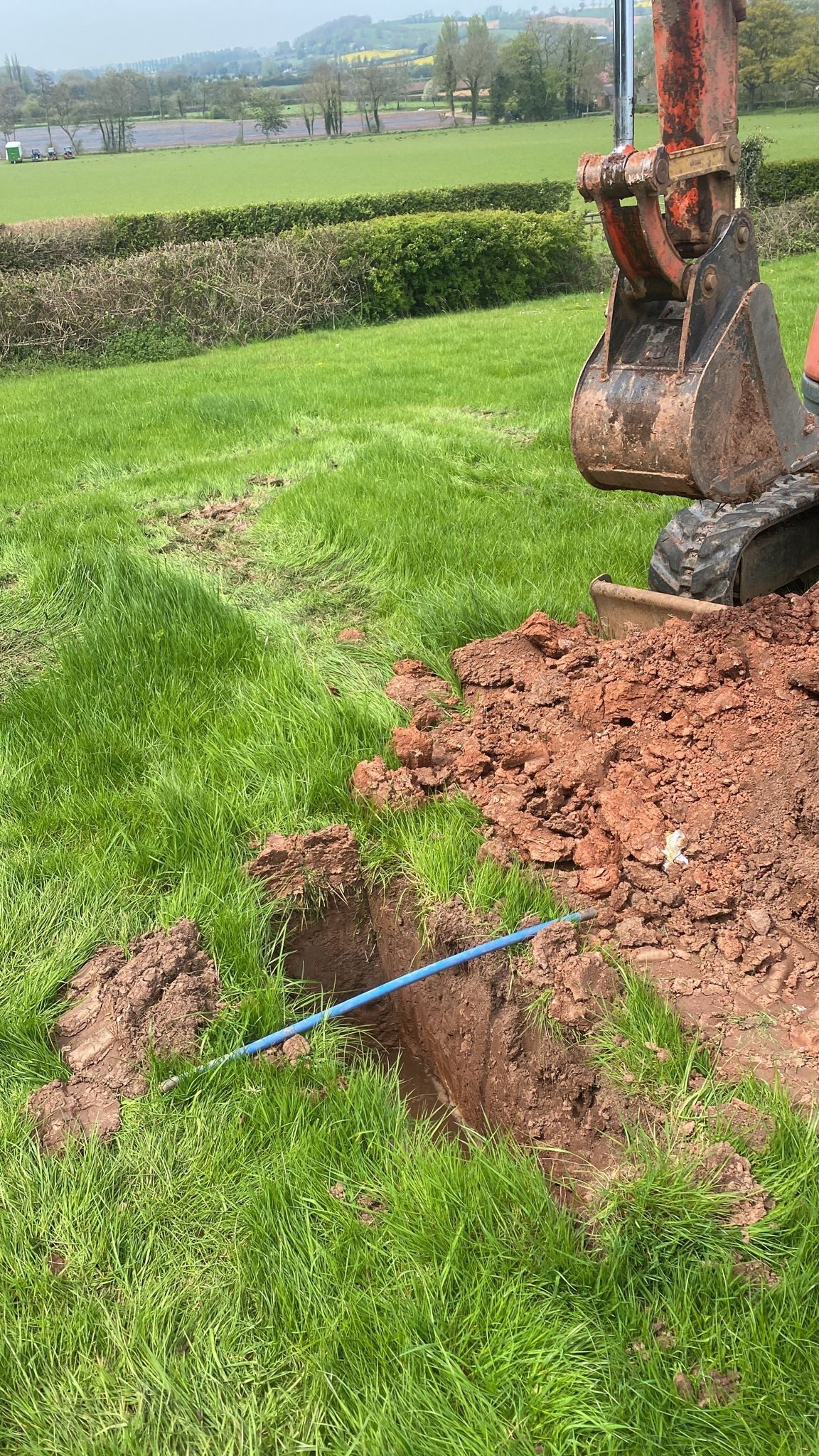
- Photographs of the testing on site
- A clear statement of whether a drainage field is viable on the site
Waste water and what goes to ground
A drainage field only works for treated effluent from a properly functioning system. Waste water carrying fats, chemicals, detergents, heavy metal rinses or solids is a different problem, and discharging it to ground is not something a drainage field is designed for. If that applies to your site, say so when you get in touch and we will point you in the right direction.
Recent testing
Get a quote
Tell us the postcode and what treatment system is proposed. We reply within 24 hours, and ask that you allow up to 48 hours for a fee proposal.