
SURFACE WATER
Soakaways sit at the top of the SuDS hierarchy, because they put surface water back into the ground rather than into a sewer or a watercourse. To design one, somebody has to know how fast the ground actually takes water, and that means a percolation test carried out to BRE Digest 365.
What you get from a BRE 365 test
Tested to BRE 365
Each pit is filled and timed three separate times, measuring the fall from 75% to 25% of the effective depth. The slowest run is the one we use.
A figure your engineer can use
You get the calculated infiltration rate, ready to hand straight to whoever is sizing the soakaway.
Testing Monday to Friday
We work around groundworks programmes, which is why we can support smaller builds and self-builds as well as larger sites.
Our own machinery
We do not sub-contract the digging. That keeps our overheads down and the price sensible.
Soakage test, infiltration test or percolation test?
They are the same test. BRE Digest 365 calls it a soakage test, and engineers and planning officers often call it an infiltration test or a percolation test. Whatever your planning condition calls it, it means digging a trial pit where the soakaway will go, filling it with water three times and timing how quickly it drains. The result is an infiltration rate in metres per second, which is what your engineer needs to size the soakaway. Septic tanks and treatment plants use a different test, to BS 6297.
Why planning asks for it
Local planning authorities and water authorities now routinely ask for a BRE365 test, both to size a soakaway and to prove whether infiltration is feasible at all. It is also the evidence required when making a Section 106 application to a water authority: before they will accept a surface water connection, they will want to see that a soakaway was properly tested and ruled out. Building control will usually want the same figures before signing the work off.
That cuts both ways, and it is worth being clear about it. A test that comes back poor is not a wasted test: it is the document that lets your engineer justify a different approach.
THE METHOD
What actually happens on site
BRE Digest 365 is more demanding than most people expect. It is not one hole and a stopwatch.
1
Trial pits dug
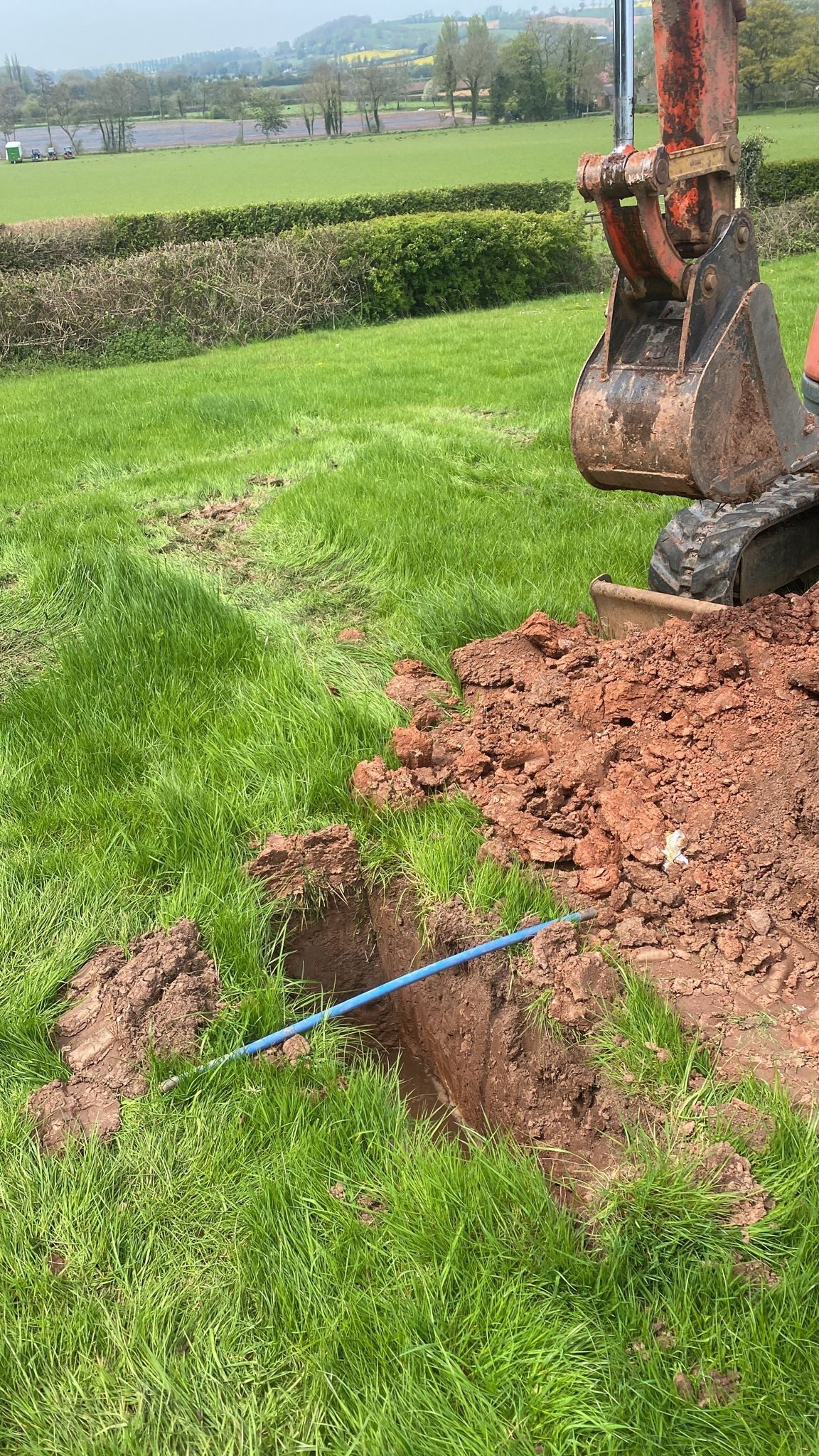
Pits go in where the soakaway is proposed, taken below the level it will sit at. How many depends on the site and design.
2
Filled and levelled
Each pit is filled to at least 75% of its effective storage depth, which is where timing starts.
3
Three timed fills
Each pit is filled and timed three separate times, measuring the fall from 75% to 25% of the effective depth.
4
Slowest result used
The slowest run governs the calculation, so the design errs towards caution rather than optimism.
What you receive
- A full report with the recorded times for every pit and every fill
- The calculated infiltration rate, ready for your engineer or planner
- Trial pit locations and depths
- Photographs of the testing on site
- A clear statement of whether a soakaway is viable, and if not, why not
If a soakaway is not viable
Sometimes the ground will not take water, or the water table sits too close to the base of the proposed soakaway. BRE365 requires clearance from groundwater, so a site can fail on that alone however well the soil drains. We would far rather tell you that plainly than produce a flattering number that gets challenged at planning. Where infiltration is ruled out, we can help with the drainage strategy instead. Where a soakaway is viable, our sister company Onn Point can take the result through to drainage design.
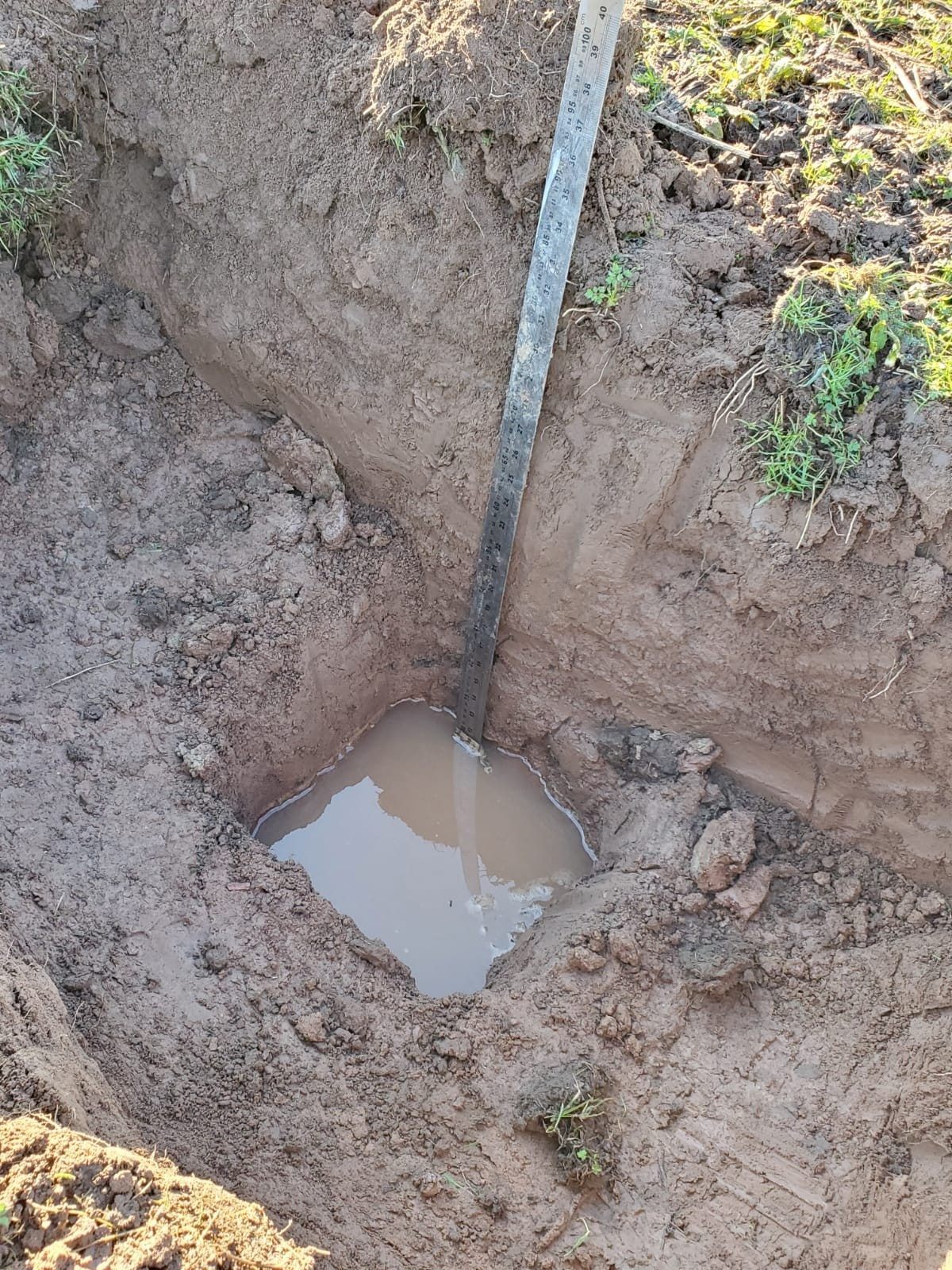
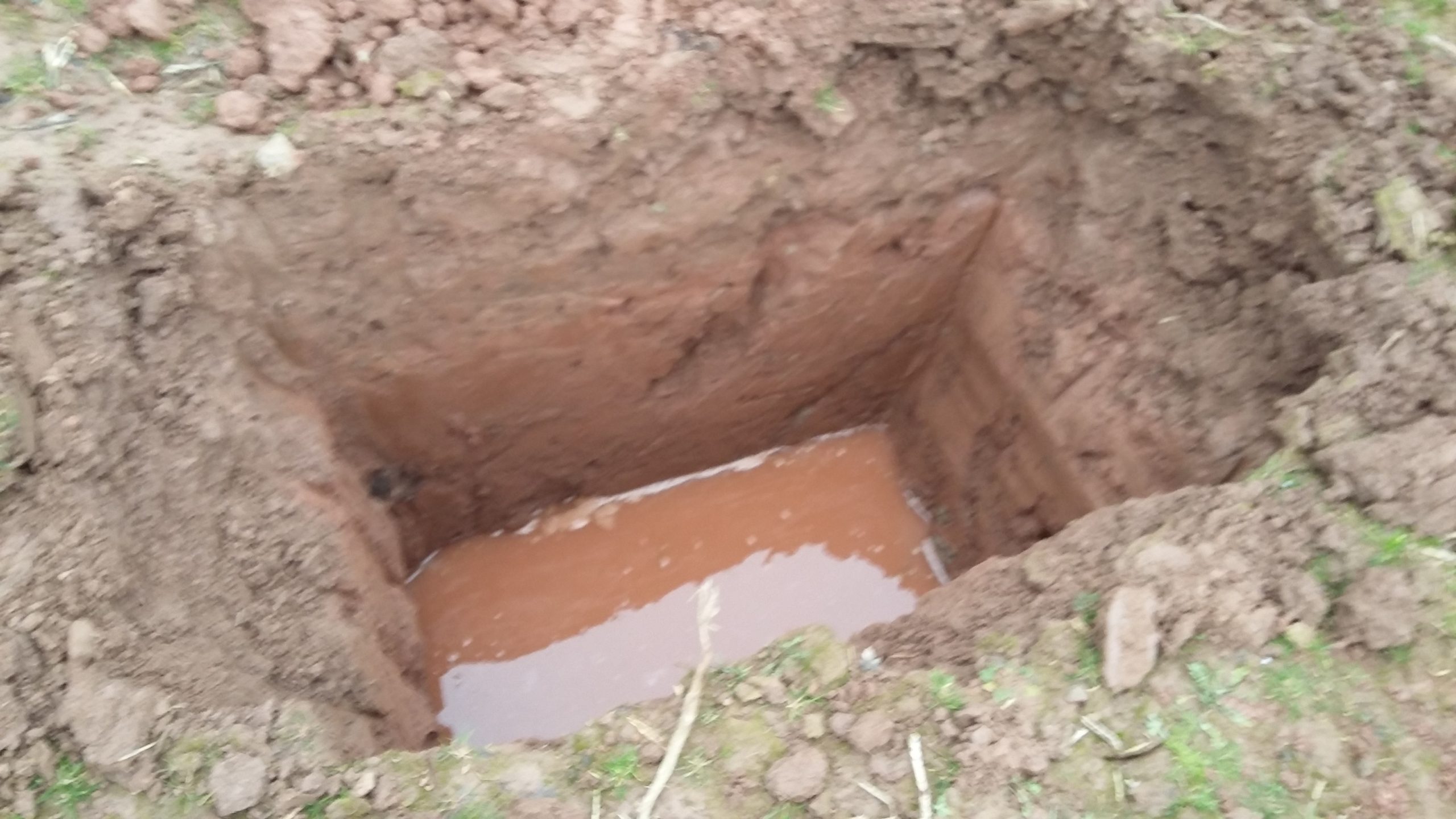
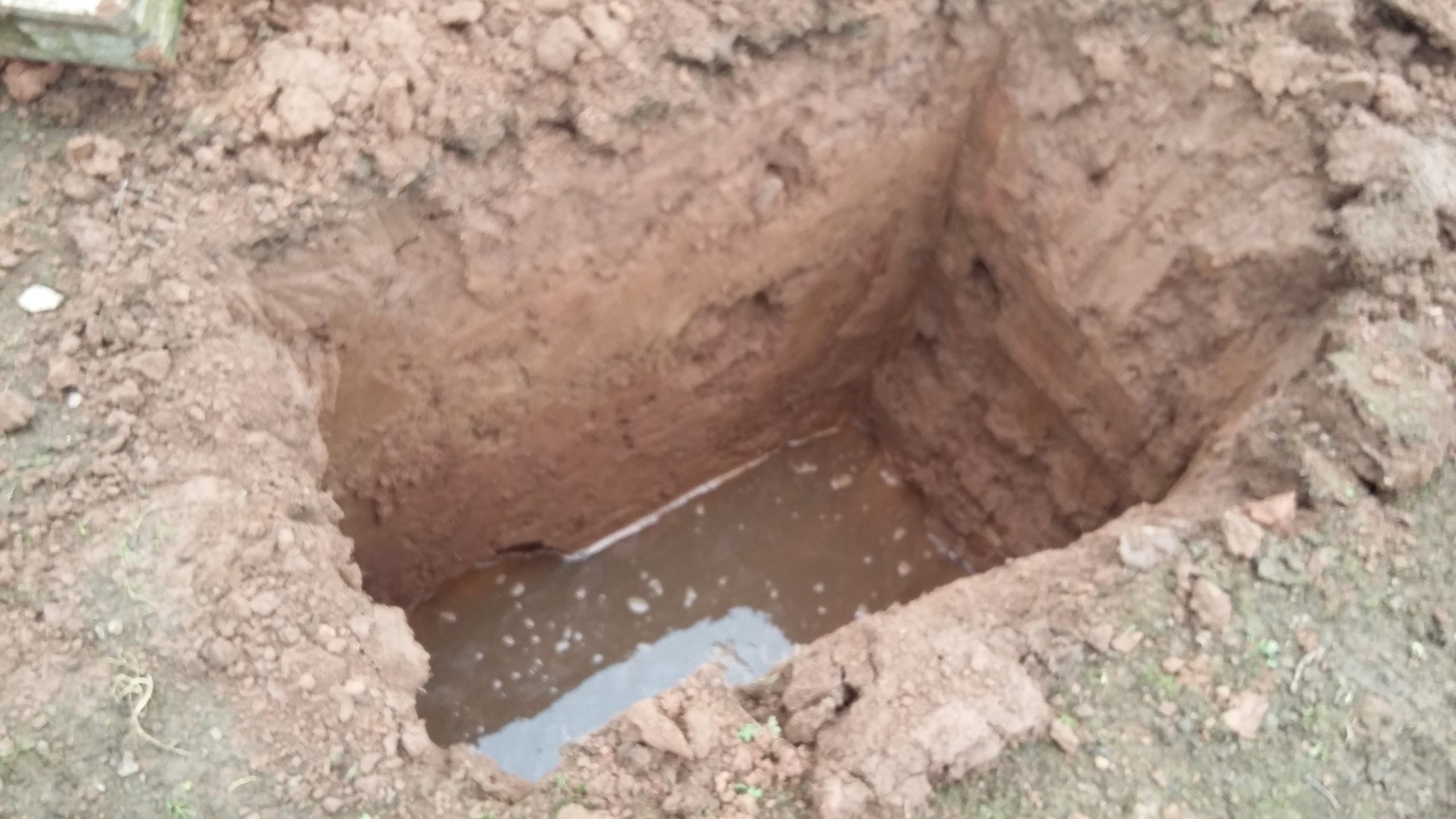
Recent testing
Get a quote
Tell us the postcode and roughly what is proposed. We reply to enquiries within 24 hours, and ask that you allow up to 48 hours for a fee proposal. We cover the Midlands, the Welsh borders and a good deal further, see where we work.