
Percolation Tests provides BRE365 soakaway percolation testing and foul infiltration testing across Staffordshire, working with self-builders, developers, and homeowners to satisfy planning conditions and building regulations.
Ground conditions in Staffordshire
Staffordshire sits across several distinct geological bands. The Trent Valley and areas around Stafford and Stone have mixed clay and gravel deposits, while the Staffordshire Moorlands to the north, bordering the Peak District, are underlain by more freely-draining sandstone and gritstone in places, alongside heavier boulder clay elsewhere. The south of the county, around Cannock Chase, includes sandy, well-draining soils in parts. This range means percolation rates can differ considerably even within a few miles, which is exactly why a site-specific BRE365 test is required rather than a generic assumption for the area.
What we test for
- BRE365 percolation testing for surface water soakaway design
- Foul effluent infiltration testing (Part H) for septic tanks and treatment plants
- Drainage strategy (SuDS) support for planning applications
Coverage across Staffordshire
We regularly test across Stafford, Stoke-on-Trent, Lichfield, Cannock, Tamworth, Burton upon Trent, Newcastle-under-Lyme, Leek, and the surrounding rural areas and Staffordshire Moorlands. Testing is available Monday to Friday to fit around build and self-build schedules.
Why get a percolation test
Local planning authorities across Staffordshire commonly attach drainage conditions to planning permissions, particularly for rural sites and self-build plots not connected to mains surface water drainage. A BRE365 percolation test provides the evidence needed to discharge these conditions and correctly size your soakaway.
Planning authorities in Staffordshire
Drainage conditions on Staffordshire planning permissions are set by the district or unitary council, and for larger schemes the Lead Local Flood Authority is consulted on the surface water strategy. Both expect infiltration to be considered first in the SuDS hierarchy and both expect the evidence to be a BRE Digest 365 test carried out on the site, not a figure taken from a map or a neighbour’s result. The authorities we most often write reports for in Staffordshire are:
- Staffordshire County Council: the Lead Local Flood Authority for the eight districts
- Stoke-on-Trent City Council, unitary, and its own LLFA
- Stafford Borough Council and South Staffordshire Council
- Cannock Chase District Council and Lichfield District Council
- Tamworth Borough Council and East Staffordshire Borough Council (Burton, Uttoxeter)
- Newcastle-under-Lyme Borough Council and Staffordshire Moorlands District Council (Leek, Cheadle, Biddulph)
If your decision notice asks for ‘infiltration testing in accordance with BRE 365’, ‘evidence of soakaway feasibility’ or ‘percolation test results to BS 6297’, that is what we produce, laid out so the case officer can find what they need without asking again.
Ground conditions in more detail
Staffordshire is the county where a postcode tells you least. The Sherwood Sandstone under Cannock Chase, Lichfield, Stafford and the Trent valley is some of the best-draining ground we test, and the Kidderminster pebble beds around Cannock can be quicker still, but the same sandstone is overlain by glacial till across much of the north and west, and till is what the trial pit usually finds. Mercia Mudstone takes over east of the Trent and around Uttoxeter, with the slow results that go with it. The Potteries and Newcastle-under-Lyme sit on the North Staffordshire coalfield, where made ground and shallow workings mean one pit cannot be trusted to speak for the next; and the Moorlands bring Millstone Grit and thin soils on steep ground.
Which test does your site need?
A BRE 365 test sizes a surface water soakaway (roof and driveway run-off) and is what Approved Document H3 and the SuDS hierarchy point to. A BS 6297 test sizes a foul drainage field for a septic tank or package treatment plant under Approved Document H2. They use different pits, different procedures and different calculations.
Outside the towns much of the county is off the mains foul sewer, particularly the Moorlands, the villages around Eccleshall and Gnosall, and the Needwood plateau. A treatment plant or septic tank there needs a drainage field sized from a BS 6297 test: a different procedure from BRE 365 with a different result, so one will not discharge a condition asking for the other. Both can be done on the same visit.
What our testing in Staffordshire shows
We have carried out more than 70 tests within a dozen miles of the Staffordshire towns listed below since 2018. Of the sites where we recorded an outcome, roughly two in three did not achieve an infiltration rate that would support a conventional soakaway. That is not a reason to skip the test: it is the reason to do it early. A measured rate, even a poor one, is what your engineer needs to size attenuation or justify a different discharge, and it is what the authority will accept. A guessed rate is what gets a scheme sent back.
What you receive
- A full report with the recorded times for every pit and every fill
- The calculated infiltration rate, ready to hand to your engineer or planner
- Trial pit locations and depths
- Photographs of the testing on site
- A clear statement of whether a soakaway is viable, and if not, why not
Get a quote
Contact us for a free, no-obligation quote for percolation or infiltration testing anywhere in Staffordshire. Call 01902 475653 or request a quote online.
Towns and areas we cover in Staffordshire
- Stafford, sandstone and Trent valley gravels, till to the west; 14 tests within ten miles
- Cannock, pebble beds and sandstone that usually drain well; 33 tests within ten miles
- Lichfield: Sherwood Sandstone, among the county’s better ground; 28 tests within ten miles
- Tamworth, sandstone in town, mudstone and Tame alluvium around it; 20 tests within ten miles
- Burton upon Trent: Trent terrace gravels next to Mercia Mudstone; 8 tests within ten miles
- Newcastle-under-Lyme, coalfield made ground; results vary pit to pit; tested nearby
- Uttoxeter: Mercia Mudstone and the Dove valley; 8 tests within ten miles
- Rugeley: Chase sandstone on one side of the Trent, clay on the other; 24 tests within ten miles
Recent work near Staffordshire
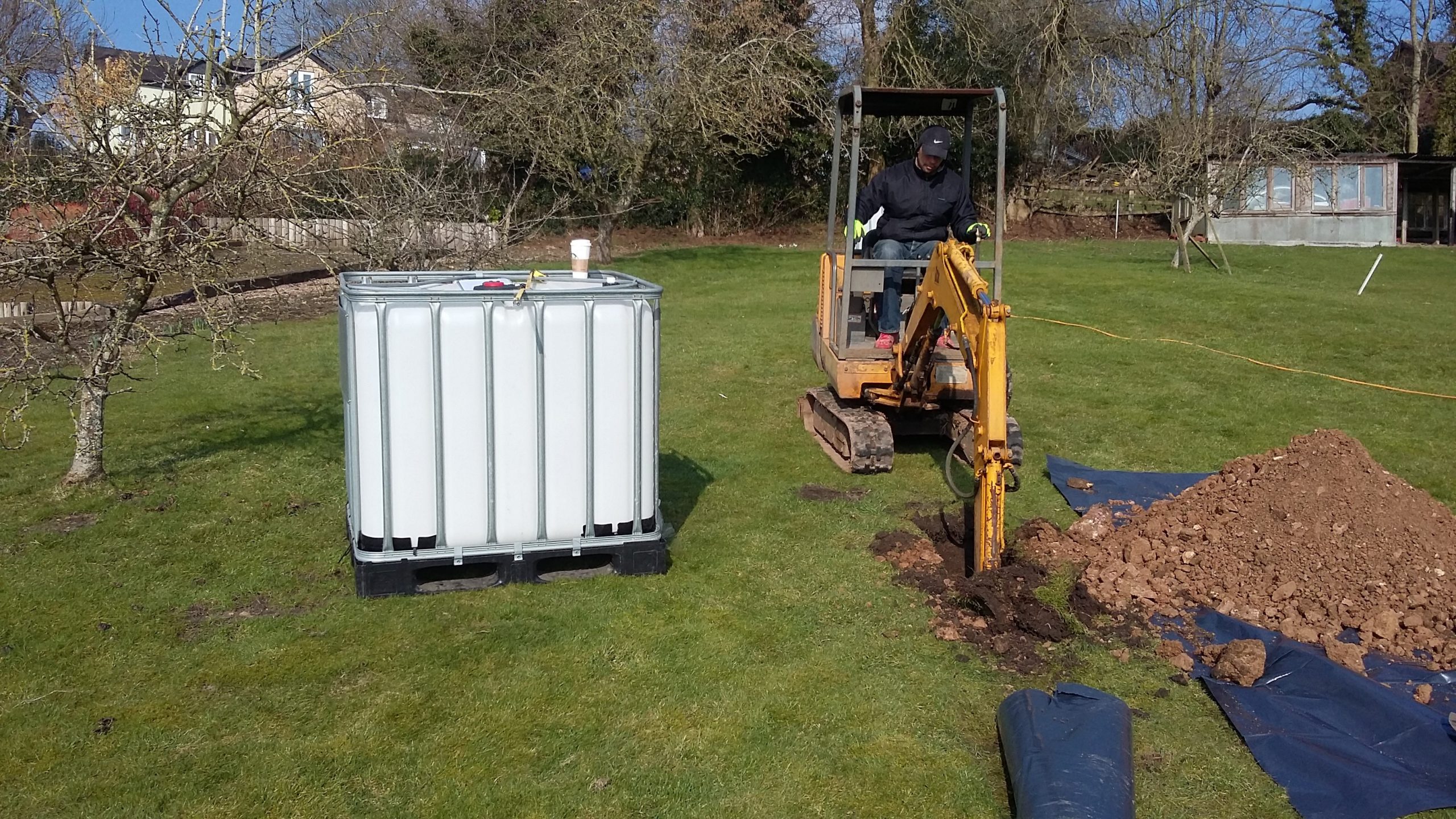
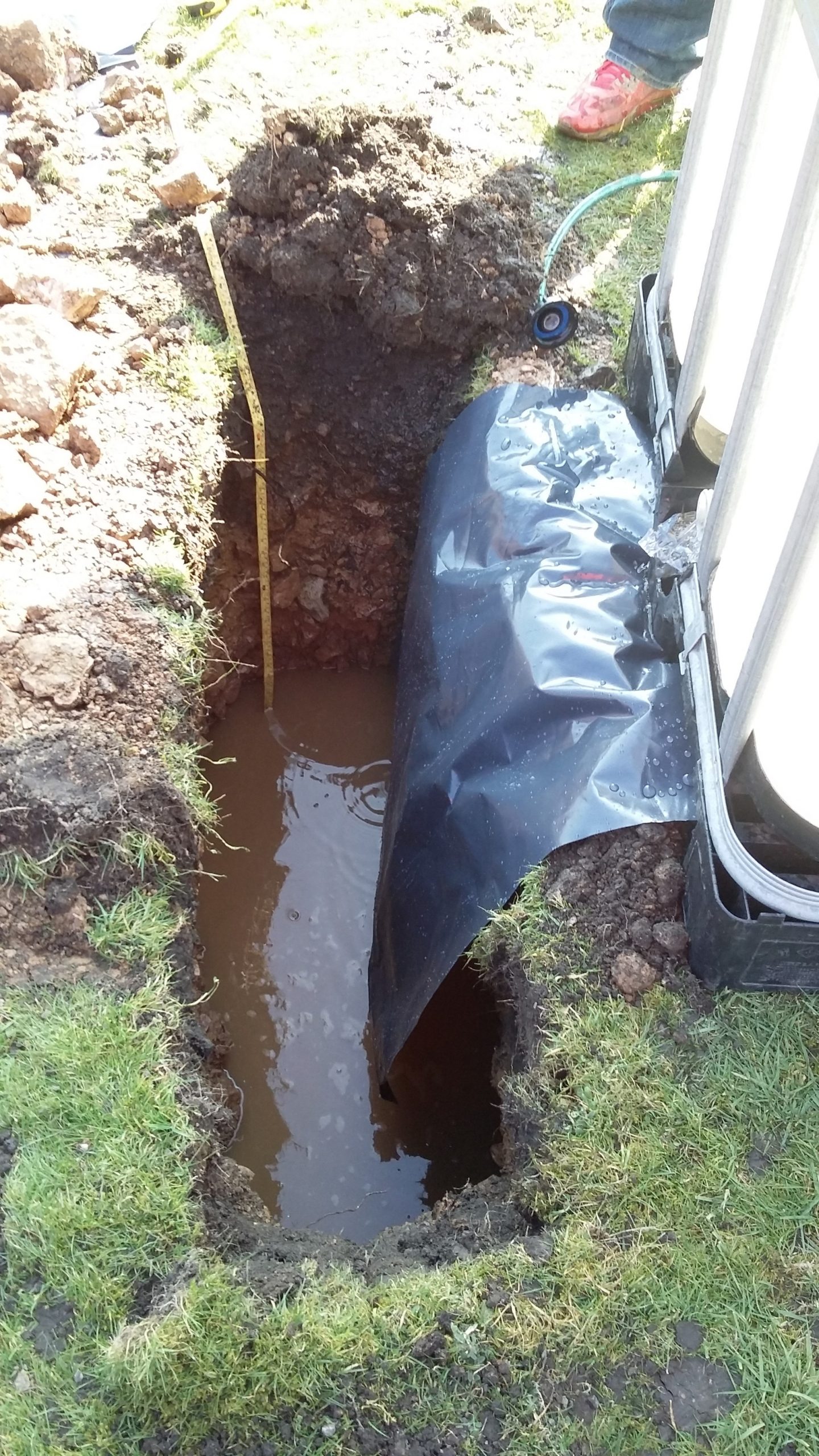
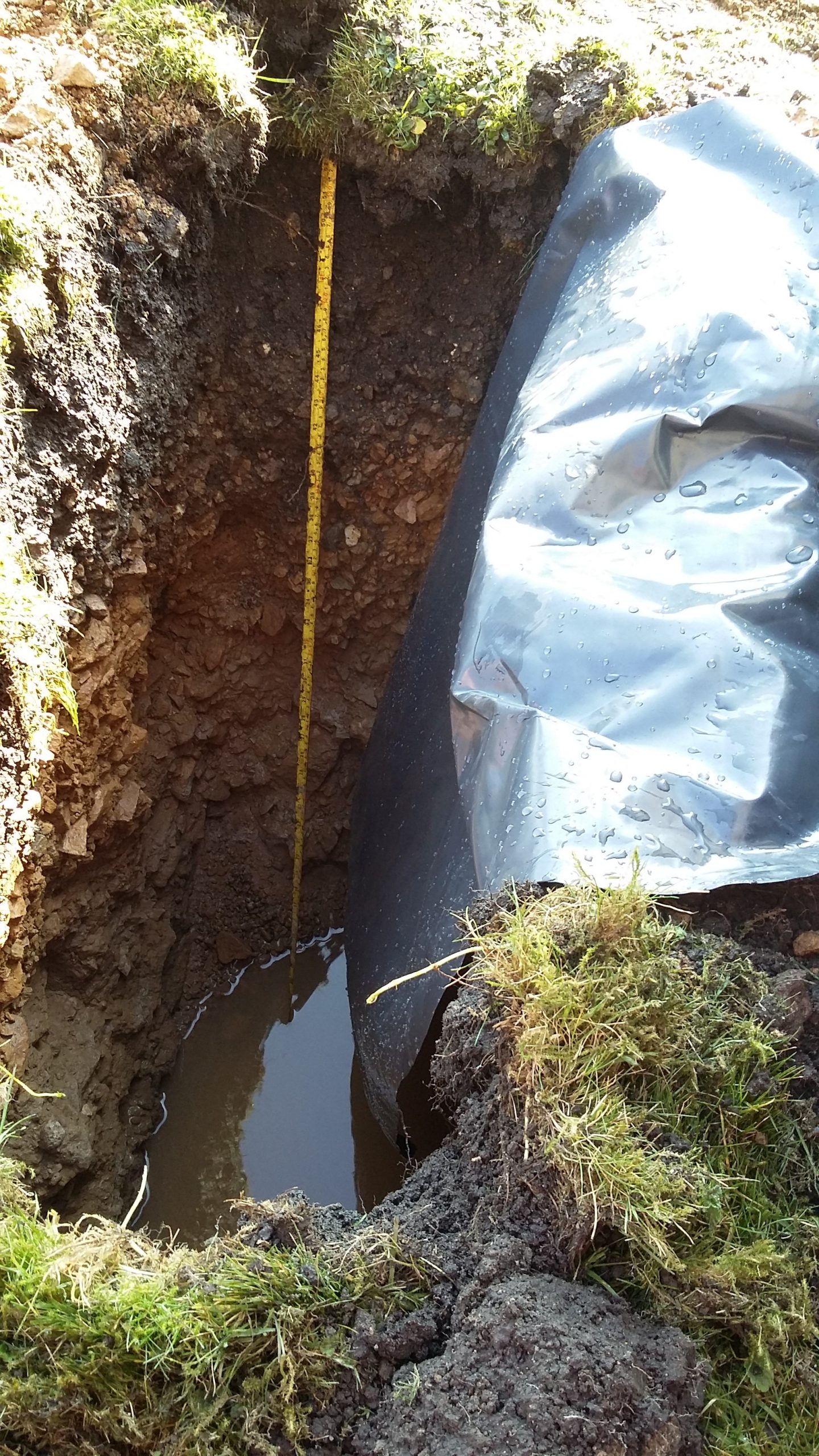
Percolation testing around Staffordshire
Each dot is a site we have tested. 13 within ten miles of Staffordshire, 101 within twenty-five.