

The site. The rear garden next to 166 Coventry Road, Exhall, near Coventry, where a single new dwelling was proposed. The planning application needed evidence of whether a soakaway could take the surface water.
What we did. Access was the first problem: the only way to the test area was through neighbouring gardens. We professionally removed the garden fences, carried out the testing, and put the fences back.
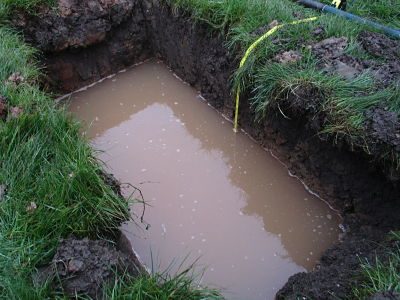
On 10 February 2018, in light rain, we dug two trial pits to 1.2 m and tested them to BRE 365, filling each to a water level of 800 mm:
- Hole 1: 600 mm × 1,400 mm
- Hole 2: 750 mm × 1,700 mm
What we found.
- Clay: both pits hit dense clay at about 1.2 m.
- No drainage: neither drained the initial 25% needed to start the timed tests, so testing was abandoned.
- Groundwater: small amounts seeped into Hole 1 while it was being dug, a sign of a high water table.
What it meant. Soakaways weren’t a viable way to discharge surface water from this plot. Our report advised further investigation of an alternative discharge route.
The lesson. Small garden plots often have the hardest access, but that’s no reason to skip the test. A clear, documented fail early on lets the drainage be designed once, around a route that works.
Need a percolation test for your own site? See how we test and report.